

Our Services
EXPERT LOCALIZATION & TRANSLATION ACROSS ALL MAJOR PLATFORMS
Apple Ecosystem
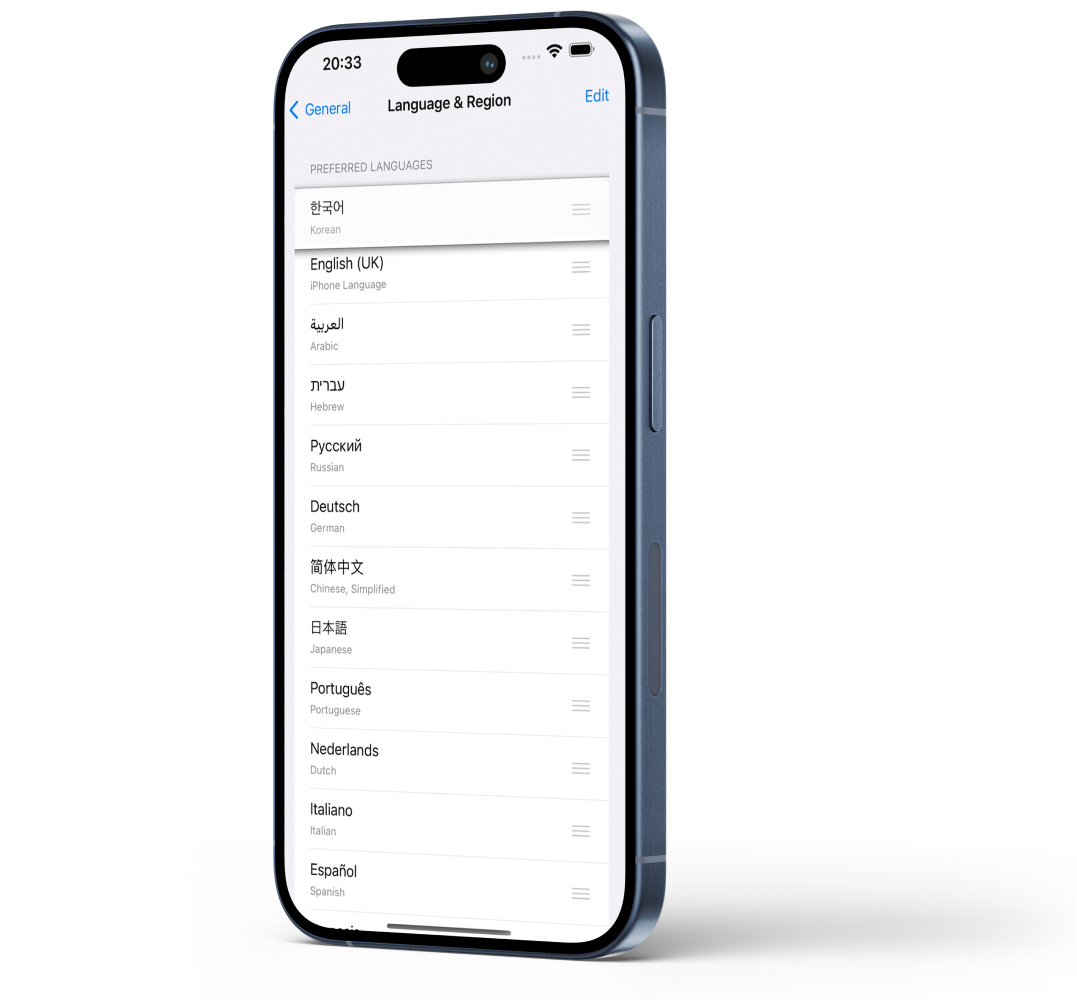
We're at the forefront of Apple ecosystem localization, covering macOS, iOS, watchOS, and soon visionOS. Leveraging the latest in Swift and SwiftUI, we ensure your products perfectly resonate with global users, strictly adhering to Apple’s Human Interface Guidelines. Plus, our App Store Optimization strategies boost your app's visibility and performance worldwide.
Android Localization
Beyond adapting XML resource files and using Android Studio, we optimize Google Play descriptions and meta tags for enhanced discoverability. This holistic approach ensures seamless device integration, enhances user experiences, and broadens your market reach, making your apps not just accessible but prominent on a global scale.
Documentation & Marketing
From user manuals and HTML help to technical documentation, our translation services extend to marketing materials and packaging with a meticulous approach to maximize global sales. Leveraging the latest in AI, including MTPE and customized model training based on specific glossaries and corpora, we ensure high-quality, contextually accurate translations that resonate with your target audience.
Emerging Technologies
Our localization expertise spans diverse verticals—from productivity software and business applications to security, digital photography, and interactive gaming. We also excel in sectors like audio/video, supply chain & procurement, and the automotive industry. Our specialization shines in pioneering fields, offering unmatched proficiency in localizing for Artificial Intelligence, Robotics, Cryptocurrencies, and Blockchain technologies.